

From a first breath in three feet of pool water to an ocean dive off the Kona coast, learning to SCUBA is a real progression. And the goal is a PADI certification travelers can use long after their Hawaiʻi adventure ends.
On our 14-day Hawaiʻi & Kauaʻi teen adventure, first-time divers work toward their PADI Open Water certification with professional instructors at Jack’s Diving Locker in Kona.
They begin with online preparation, spend two days practicing skills in the pool, and progress to two shore dives and two boat dives in the Pacific.
Most have never breathed underwater before. Instead of rushing straight into the ocean, they build new skills one step at a time, demonstrating what they’ve learned before moving on.
Here’s how a beginner becomes a diver, and what that achievement can open up for future adventures.
PADI eLearning at home
Two full pool-training days
Two open-water shore dives
Two boat dives and final skills
It Starts Before We Arrive in Hawaiʻi.
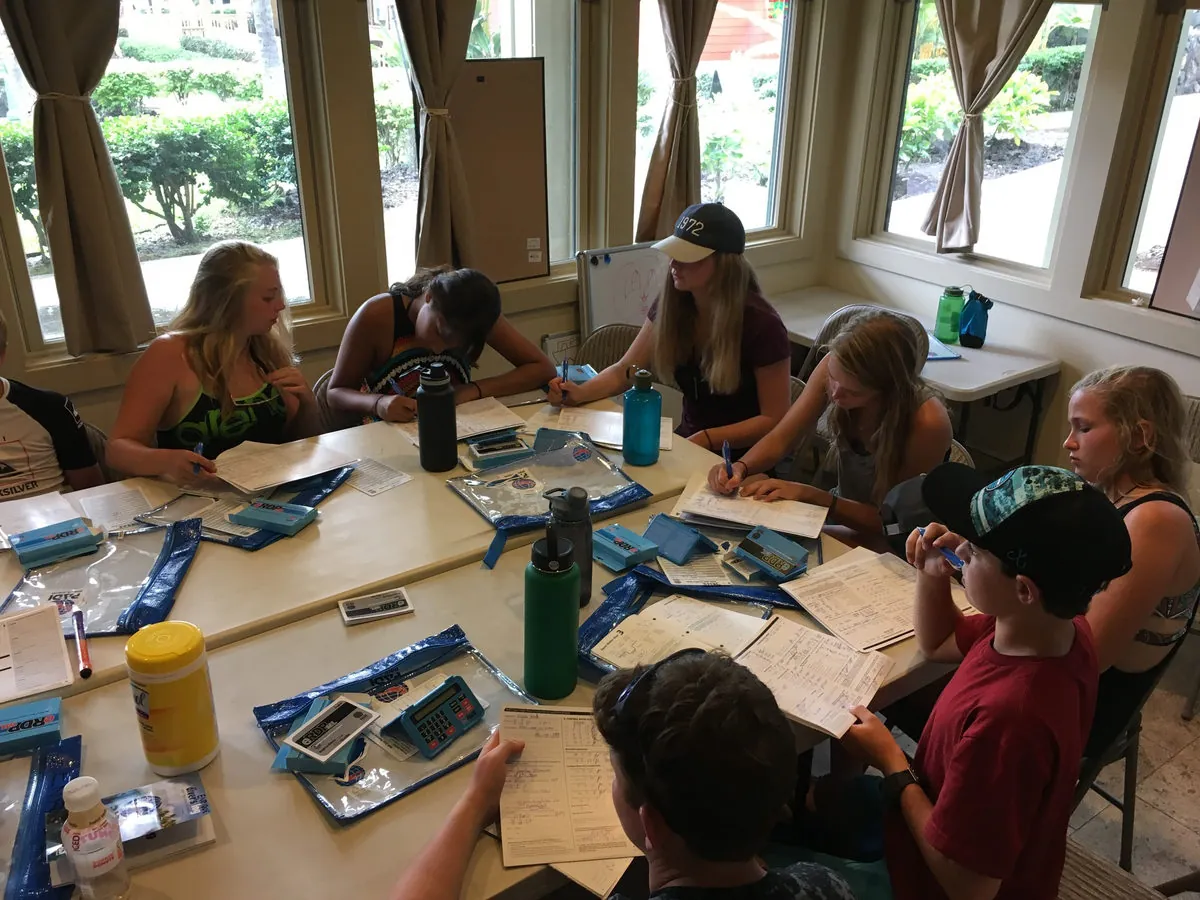
Our travelers begin their PADI Open Water course through an online learning program before arriving in Hawaiʻi.
PADI eLearning introduces the fundamentals of SCUBA diving, including equipment, underwater communication, dive planning, and important safety principles.
Travelers work through the lessons at their own pace and complete the required knowledge development before their in-water training.
By the time we arrive in Kona, everyone has already started learning the language of diving. Now it’s time to put those lessons into practice.
Learning With Jack’s Diving Locker.
We work with Jack’s Diving Locker in Kailua-Kona, and there’s a personal connection here.
I earned my own SCUBA certification at Jack’s years ago. Now I get to bring Wild Traveler participants back to learn from the same organization.
Jack’s is professional, welcoming, and genuinely passionate about diving. Their classroom and excellent training pool, located right in Kona town near the ocean, provide a great environment for teenagers who are learning for the first time.
One of the things I love about training here is the atmosphere. Our travelers aren’t just completing a course.
They get a glimpse into the local SCUBA community, meet people who have built their lives around the ocean, and begin to understand why diving means so much to them.
First Breaths Underwater.
Our first two days of in-water training take place in Jack’s dedicated dive pool.
The pool has a shallow section approximately three feet deep and a deeper section reaching about twelve feet.
Everyone starts in the shallow end.
At first, students practice with their faces just below the surface. They get used to breathing through a regulator, communicating with their instructors, and handling their equipment in the water.
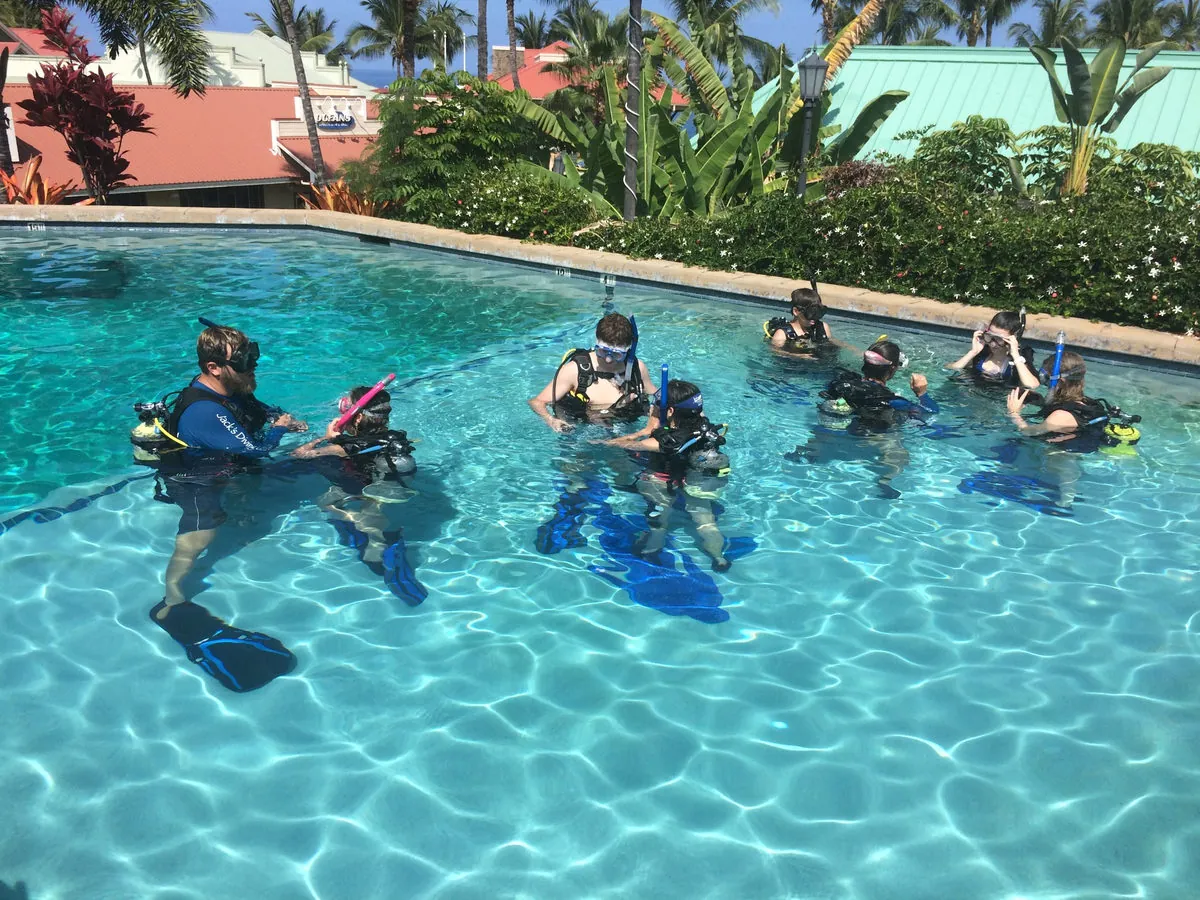
Then comes the practice: clearing water from a mask, recovering a regulator, managing equipment, communicating underwater, and learning to control buoyancy.
Some skills come quickly. Others take repetition. That’s normal, and it’s exactly why we spend two full days in the pool.
Once students demonstrate the necessary skills and are comfortable, they move to the deeper section to practice at greater depth.
By the end of their pool training, the equipment feels more familiar. The students know what their instructors expect, and they’ve practiced the skills they’ll use in the ocean.
That’s when things get really exciting.
From the Pool to the Pacific.
Our next step is the ocean. Rather than beginning from a boat, students enter the water directly from shore.
Their PADI instructors guide them through preparing their equipment, entering the water, and completing two open-water dives.
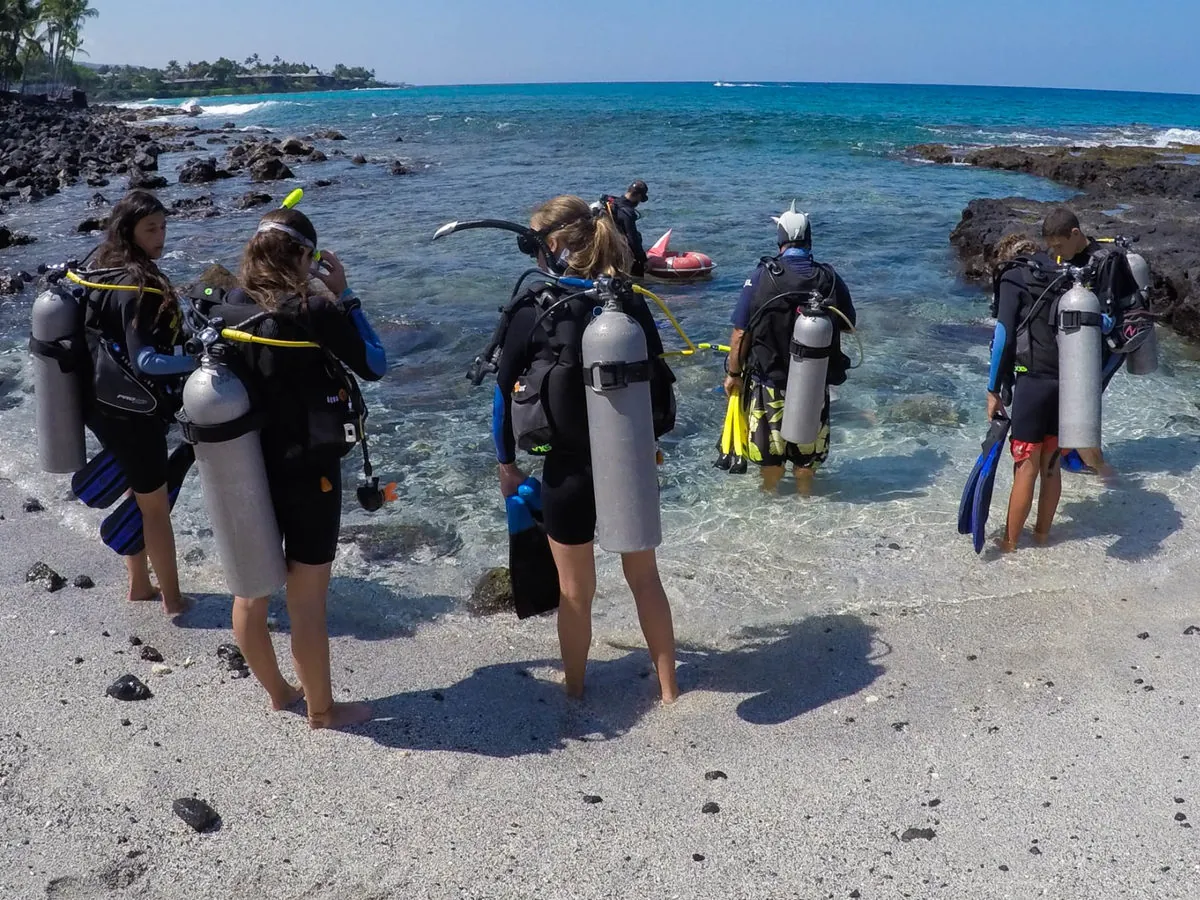
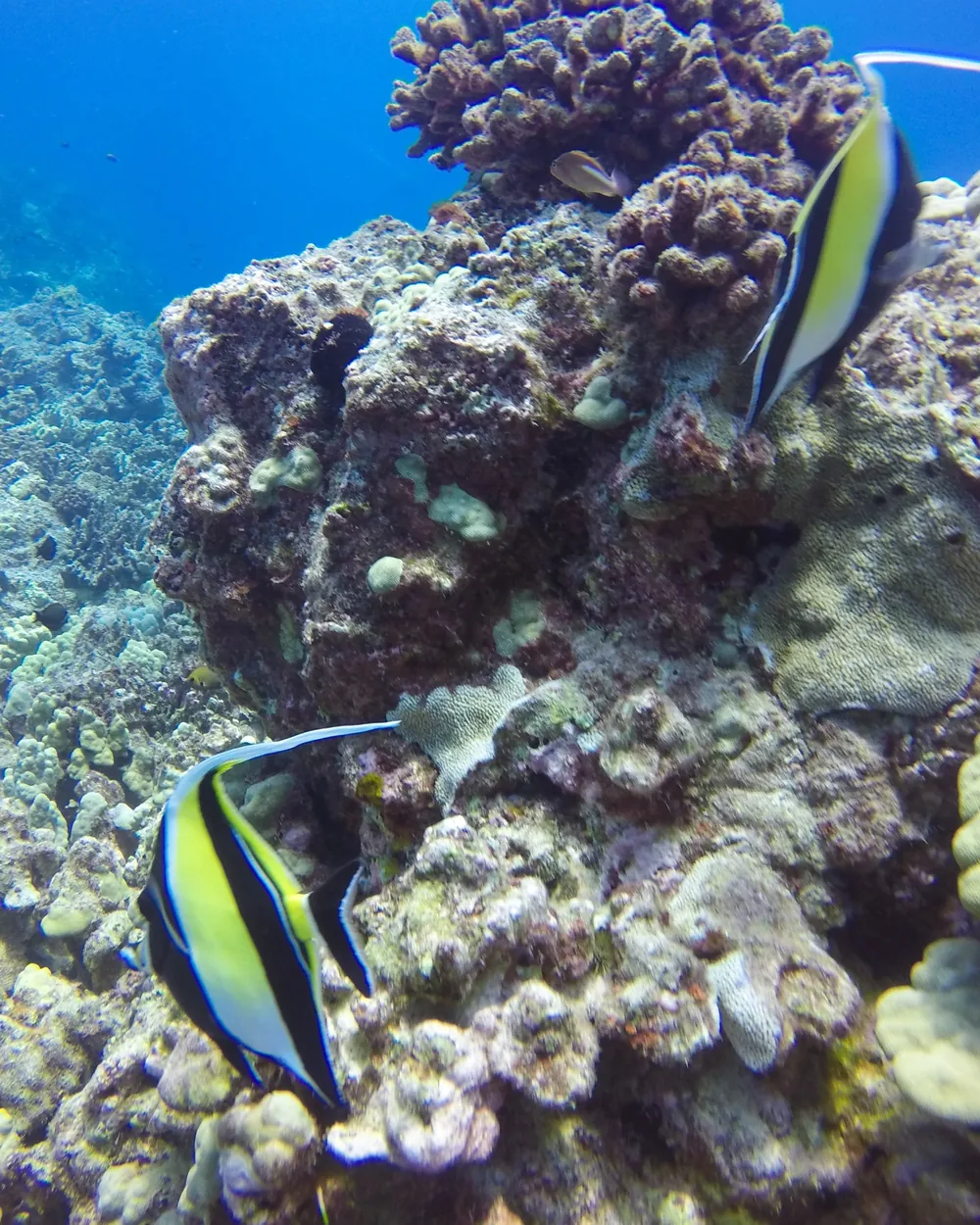
They’re practicing many of the same skills they learned in the pool. But now there are tropical fish, volcanic rock formations, and an entire underwater environment surrounding them.
It’s a big moment. A teenager who was learning to breathe underwater a few days earlier is now diving in the Pacific.
For many of our travelers, this is the moment they begin to understand why people fall in love with SCUBA diving.
Now We Dive From a Boat.
Our final training day takes us aboard a dive boat along the Kona coast.
By now, students have completed two full days of pool practice and two ocean dives from shore.
They’ve developed their skills, learned to work with their equipment, and grown more comfortable underwater.
Now they complete two more open-water dives, entering the ocean from the boat with their instructors.
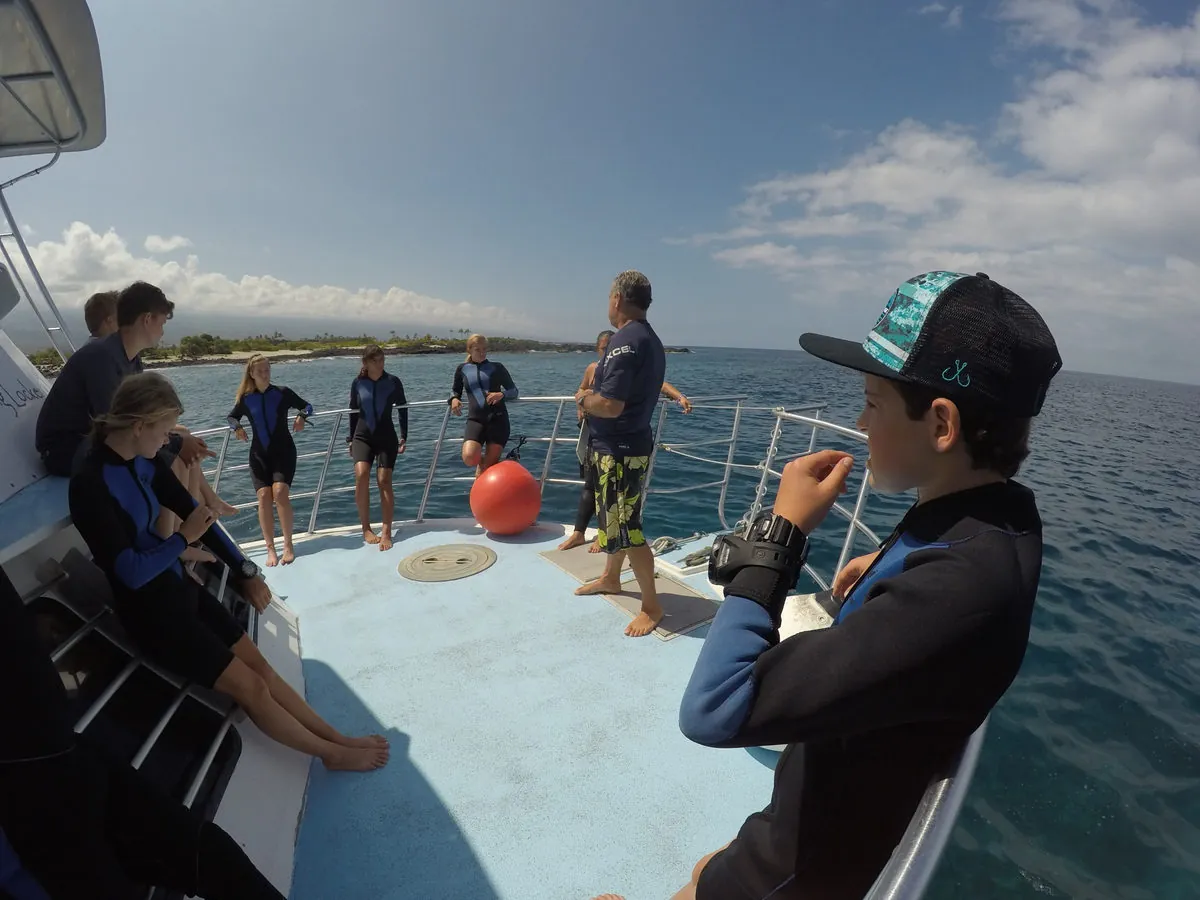
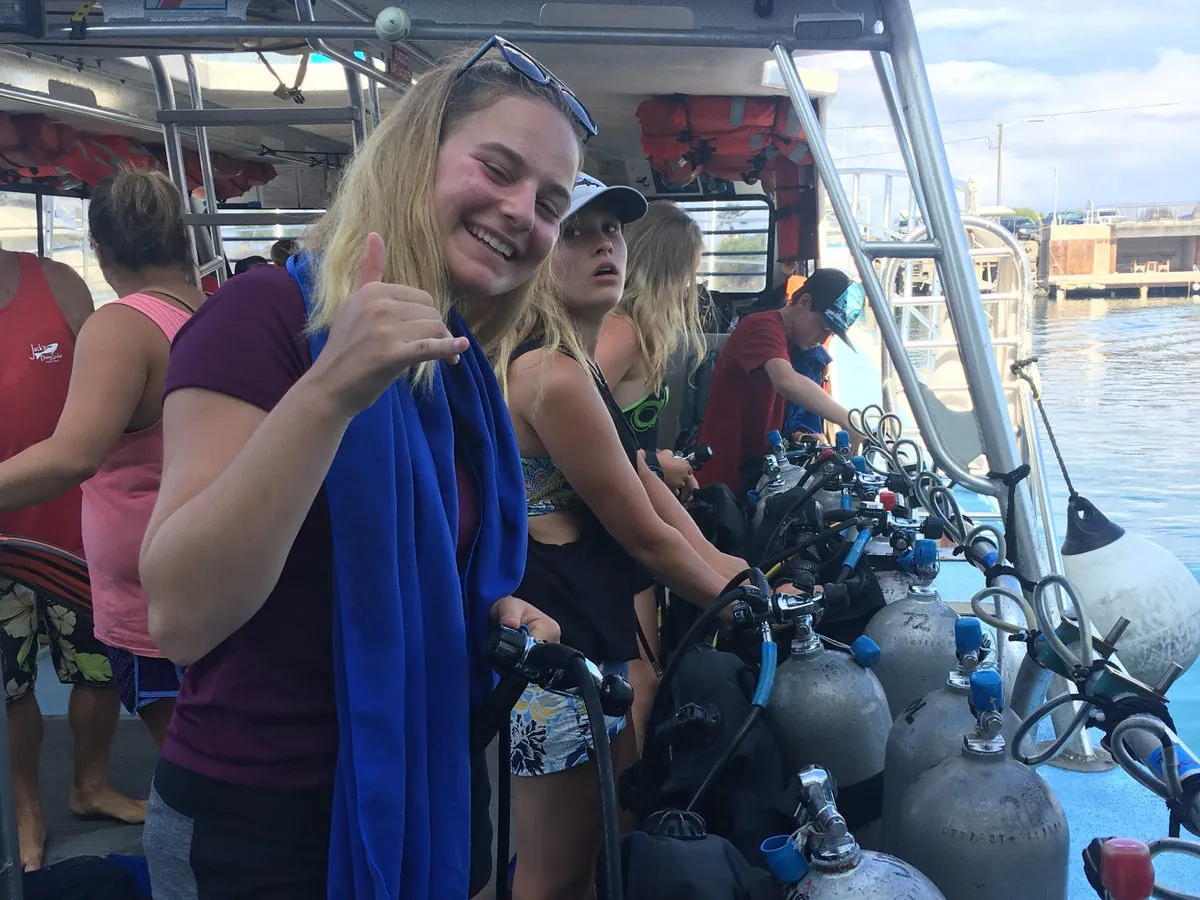
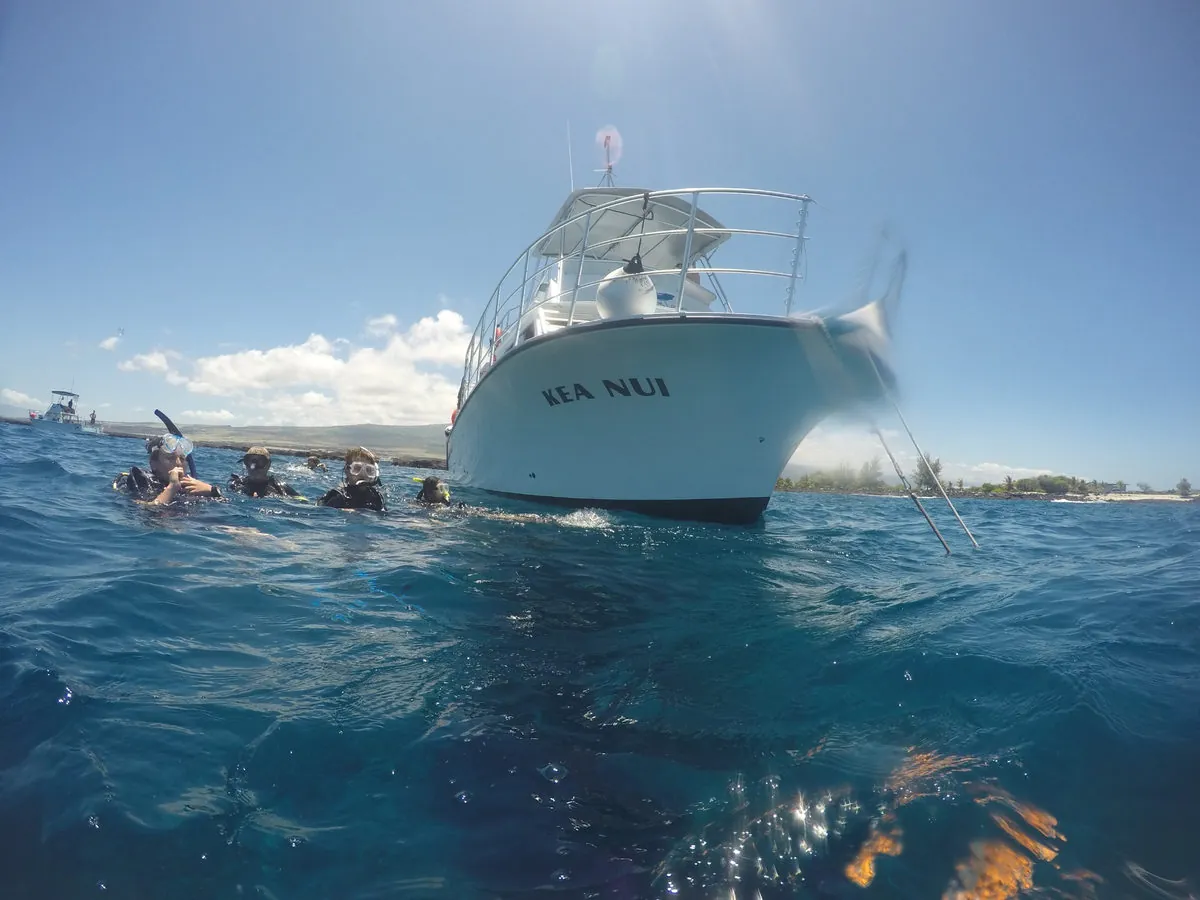
This is an incredible place to learn. Depending on the dive site and conditions, we might see frogfish, needlefish, rays, sea turtles, and colorful reef fish. There’s always something new to notice.
Students continue demonstrating their diving skills while exploring a world that was completely unfamiliar to them when the course began.
The final dives bring everything together. Students apply what they’ve practiced, communicate with their instructors, and demonstrate the skills they’ve developed throughout the course.
A Real Certification. Not Just a One-Time Experience.
What makes this experience especially valuable is that students aren’t simply trying SCUBA diving for an afternoon. They’re training toward a recognized qualification that belongs to them.
The full certification course is included in our Hawaiʻi program tuition. Over several days, participants receive professional instruction, develop their skills in the pool, and complete four open-water dives.
We include it because the learning goes beyond a single trip: students have the opportunity to earn a recognized diving certification and build skills they can use on future adventures.
Travelers who meet all PADI Open Water course requirements earn a PADI Open Water Diver certification, or a PADI Junior Open Water Diver certification if they’re under 15.
This is an internationally recognized recreational diving qualification that can be used with dive operators around the world, within the diver’s age, training, and experience limits.
PADI Open Water certifications do not expire. That means a traveler might use their certification on a future family holiday, a trip with friends, or another Wild Traveler adventure.
And the learning doesn’t have to stop in Hawaiʻi. On our Tioman Island adventure in Malaysia, already-certified divers have the opportunity to take the next step and work toward their PADI Advanced Open Water certification. Those who haven’t dived in a while should refresh their skills before returning to diving.
Some students may need additional practice or may complete a different certification level depending on their progress and comfort in the water.
Professional PADI instructors determine whether course requirements have been met. Certification is earned, not automatic.
Learn more about PADI certifications and continuing education.
And Yes, We Take a Break.
There’s more to our Hawaiʻi adventure than SCUBA training.
We build a day away from diving into this part of the program, giving everyone time to enjoy the island, relax, and spend time together outside the water.
We might hike down toward the Captain Cook Monument and snorkel the beautiful waters of Kealakekua Bay, spend some time exploring Kona, or head out for dinner together.
It’s also a chance to share stories from the dives, enjoy good food, and get to know one another better.
The adventures are memorable, but so are the friendships and everyday moments between them.
One More Thing: Manta Rays After Dark.
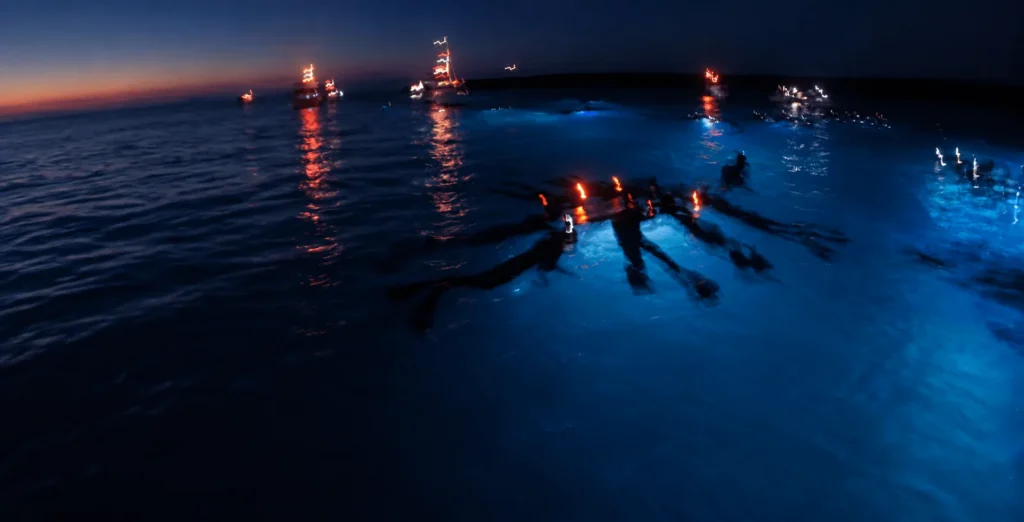
While we’re on Hawaiʻi Island, we also head out for an unforgettable night snorkeling experience with manta rays.
Our group floats at the surface, holding on to large, specially modified stand-up paddleboards that help keep everyone together.
Lights shine down into the ocean, attracting plankton. Manta rays feed on plankton, and when they arrive, watching these enormous animals glide through the illuminated water is extraordinary.
We observe the mantas without touching or chasing them. As with any wildlife experience, sightings depend on nature and cannot be guaranteed.
This is snorkeling, not part of the SCUBA certification course, and it deserves a story of its own.
Teen SCUBA Certification: Frequently Asked Questions
Does my teenager need SCUBA experience?
No previous SCUBA certification is required for the beginner Open Water course. Students do need to meet the course’s swimming, medical, and other participation requirements.
What if my teenager has trouble with a skill?
That’s part of learning something new. Students can practice with their instructors and progress when they’re ready.
PADI instructors assess each student’s performance against the course requirements. Certification is not guaranteed.
Can my teenager use the certification on future trips?
Yes. PADI Open Water certification is recognized by dive operators worldwide and does not expire. Divers must stay within their training, experience, and age-related limits.
After a long break from diving, a refresher is recommended.
Is the certification different for younger teenagers?
Successful students under age 15 generally earn PADI Junior Open Water Diver certification, with age-related buddy and depth requirements.
At age 15, Junior Open Water divers can upgrade to the standard Open Water Diver certification. Students who are already 15 or older may earn the standard certification directly.
What about teenagers who are already certified?
Already-certified divers have their own diving experience during the first two training days. They’ll head out for two days of boat diving with other certified participants and our trip leaders, exploring more of Kona’s incredible underwater world.
For the remaining two days, they’ll rejoin the rest of the group for the shore and boat dives. This gives experienced divers more time underwater while keeping everyone connected as a group.
It’s About More Than a Certification.
The certification is something tangible: a new skill, a PADI credential, and the possibility of diving again somewhere else in the world.
But what stays with me is watching how students earn it.
The student who was nervous about breathing underwater on the first day is now confidently practicing skills in the Pacific.
They’ve learned to use unfamiliar equipment, communicate with their instructors, manage challenges, and take responsibility for themselves in a new environment.
And they’ve done it alongside a group of new friends.
They leave with more than a great underwater story. They’ve worked toward something through patience, practice, and real effort.
Those who complete the requirements leave with a certification they can put to use on future dives.
That’s the kind of experience we hope every Wild Traveler takes home.
Ready to Explore Hawaiʻi?
Our 14-day Hawaiʻi & Kauaʻi adventure includes a full PADI SCUBA certification course, along with surfing, manta ray snorkeling, hiking, island exploration, and the friendships that make traveling together unforgettable.
Small groups. Experienced leaders. A whole lot of adventure.